
OverView
Traditional vulnerability scoring systems rely heavily on static CVSS values and manual prioritization. RiskPrism’s AI-Driven Risk Scoring Engine revolutionizes this process by combining machine learning, contextual data, and business impact modeling to deliver continuously evolving, intelligence-based risk scores.
This approach ensures your security teams focus on vulnerabilities that truly matter the ones most likely to be exploited and most damaging to your business operations.
How It Works
Data Ingestion
- Collects vulnerability, asset, and exposure data from scanners (Qualys, Tenable, Rapid7, etc.).
- Ingests contextual metadata: network topology, exploit data, business criticality, and historical remediation patterns.
Feature Engineering
- Converts raw data into risk vectors, incorporating factors like:
- Asset value and sensitivity
- Exposure level (public, internal, isolated)
- CVSS base and temporal metrics
- Threat intelligence (CISA KEV, EPSS, MITRE ATT&CK)
- Remediation SLA performance and incident history
Machine Learning Model
- A hybrid model combines supervised learning (historical incident patterns) and unsupervised clustering (emerging risk correlations).
- Continuously retrains on live vulnerability outcomes improving prioritization accuracy over time.
Dynamic Risk Score Output
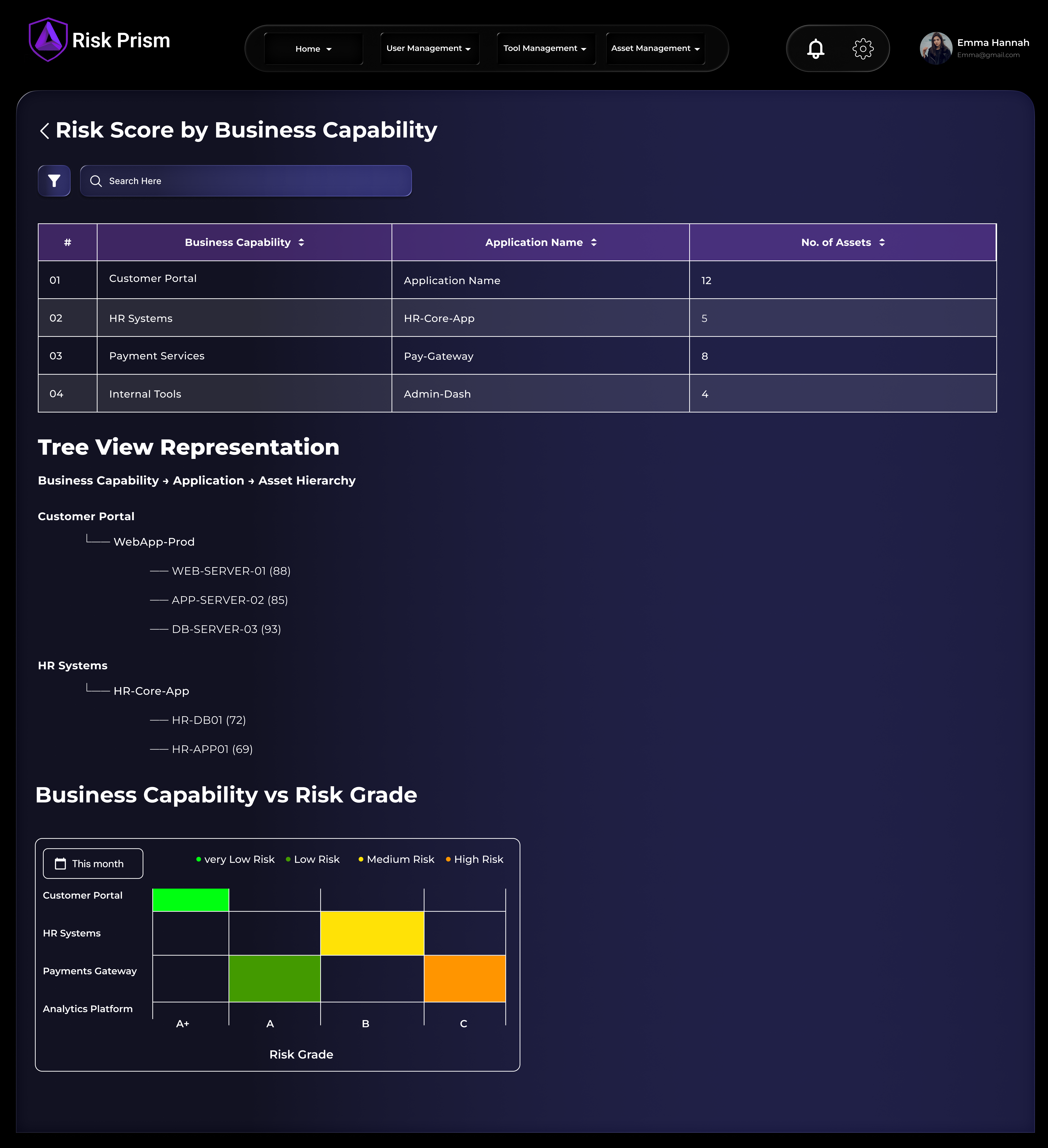
- Generates a normalized 0–500 score, mapped to Risk Grades (A–D).
- Scores update in real time when:
- Exploits become active in the wild
- Asset criticality changes
- A vulnerability is remediated or new dependencies are detected
Key Capabilities
Supported Tools:
- Predictive Prioritization: AI forecasts which vulnerabilities are most likely to be exploited in your environment.
- Contextual Weighting: Automatically assigns higher weight to vulnerabilities on high-value or externally exposed assets.
- Adaptive Learning: Improves accuracy over time using your organization’s historical risk and fix data.
- Exploit Intelligence Integration: Pulls data from global feeds like CISA KEV, NVD, and ExploitDB to adjust scores dynamically.
- Scenario Simulation: Allows “what-if” analysis e.g., what happens to organizational risk if a tier remains unpatched.
Benefits
| Advantage | Description |
|---|---|
| Higher Accuracy | Moves beyond static CVSS to dynamic, context-aware scoring. |
| Faster Remediation Focus | Reduces noise 70% fewer “false criticals.” |
| Data-Driven Insights | Leverages ML to identify patterns invisible to manual analysis. |
| Continuous Optimization | Learns from your historical fix trends to refine prioritization. |
| C-Suite Alignment | Converts technical data into business risk metrics for better communication. |