OverView
RiskPrism provides unified visibility across infrastructure, applications, cloud environments, and source code repositories. By aggregating host, network, container, and code-level vulnerabilities in one view, teams can instantly identify outdated assets, unmanaged systems, and blind-spots that introduce hidden risk.
How It Works
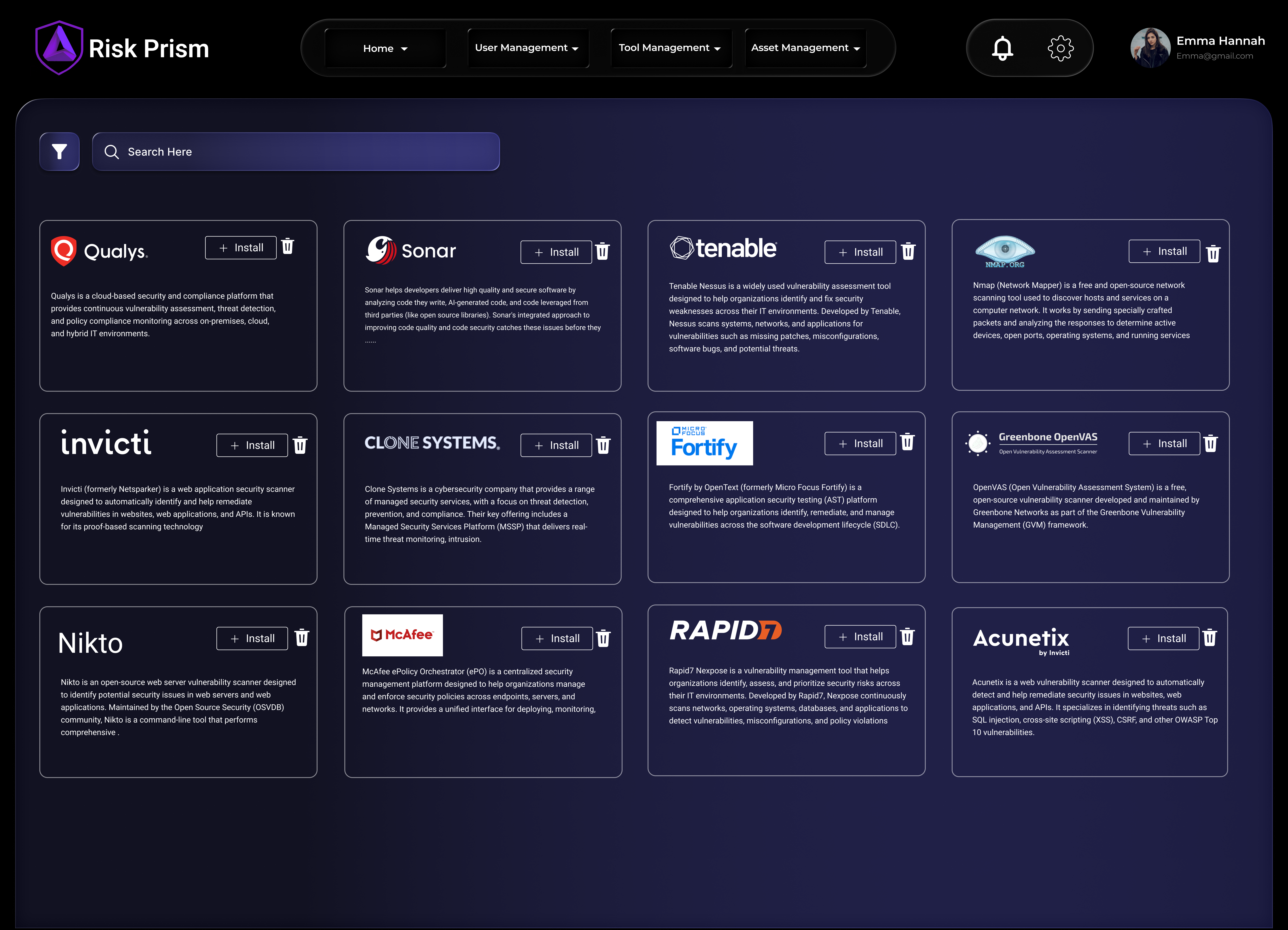
RiskPrism continuously ingests data from scanners, cloud platforms, code security tools, and inventory systems, then normalizes and maps findings to individual assets or repositories. Each asset is scored based on business impact, exposure, exploitability, and code maturity. Unscanned or stale assets are automatically flagged to prevent risk blind spots.
Data Flow:
Inventory → Scan/Import → Correlate by Asset → Score → Visualize & Track
Data sources may include:
- Cloud metadata (AWS, Azure, GCP)
- Host & network scanners (Nmap, Nessus, Qualys)
- Source code scanners (SonarQube, Fortify, Veracode)
- CMDB & deployment tools
Key Capabilities
- Unified inventory of infrastructure, applications, and code repositories
- Automatic mapping of vulnerabilities to specific assets, tiers, and services
- Visibility into unscanned, outdated, and end-of-life assets
- Git-based repository mapping (branch, commit, repo owner, deployment status)
- Exposure indicators (public-facing, internal, restricted, deprecated)
- Asset maturity scoring based on patch cadence & scan freshness
- Dependency-based vulnerability mapping across workloads
- Secure authentication with API keys, OAuth2, tokens, and service accounts
Benefits
- Eliminates blind spots across infrastructure and code pipelines
- Reduces risk from stale, shadow IT, or unmonitored assets
- Helps teams focus remediation where exposure and business impact are highest
- Improves collaboration between Security, IT, and DevSecOps
- Ensures no vulnerability is overlooked due to scan gaps or asset misalignment
- Supports complete lifecycle visibility from code commit → deployment → production